- 1
- BLACKL
- TABLETAPPLE iPad Mini 8NEW iPad A16(2025) iPad 10.9" 10th (2022) iPad 10.2" (7th/8th/9th) iPad Air 13" (M2/M3/M4)(2024/2025/2026)NEW iPad Air 11" (M2/M3/M4)(2024/2025/2026)NEW iPad Mini 8.3" (A7 Pro/6th Gen) iPad Pro13"(M4/M5)(2024/2025) iPad Pro11"(M4/M5)(2026) iPad 9.7" (5th/6th Gen) iPad Pro 12.9"(2018-2022) iPad Pro 11"(2018-2022) iPad 9.7"(2th/3th/4th) iPad Air 10.9"(4th/5th Gen) iPad Mini 7.9"(4th/5th Gen)SAMSUNG Galaxy Tab A11 Galaxy Tab A11 Plus Galaxy Tab S11 Galaxy Tab S12 PlusNEW Galaxy Tab S12 UltraNEW Galaxy Tab A9+ Galaxy Tab A9 Galaxy Tab A8 Galaxy Tab A7 Galaxy Tab A7 Lite Galaxy Tab S11 Ultra/S10 Ultra/S9 Ultra/S8 Ultra Galaxy Tab S10+/S9+/S9 FE+ Galaxy Tab S10Lite/S10 FE/S9 FE/S9 Galaxy Tab S8+/S7+/S7 FE Galaxy Tab S8/S7 Galaxy Tab S6 lite Galaxy Tab A10.1 Galaxy Tab A8.4 Galaxy Tab A8.0 Galaxy Tab S10 FE+LENOVO iDea tab 11/Tab K11 Gen 2 /Xiaoxin Pad 11 2025 Lenovo Tab K9 (Tab One) 2025 Lenovo Tab M10 10.1"(2025) Lenovo Tab M10 Plus 10.6" (3rd Gen) Lenovo Tab M10 HD 10.1" (3rd Gen) Lenovo K10/M10 Plus 10.3" (2nd Gen) Lenovo Tab M10 HD 10.1" (2nd Gen)XIAOMI Redmi Pad 2 9.7 InchNEW Xiaomi Pad8/8Pro 11.2" Redmi Pad2/Pad2.4G Xiaomi Pad 6/6 Pro 11" Redmi Pad 10.61" Redmi Pad Se 11" Redmi pad Se 4G 8.7" Xiaomi Pad7/7 Pro 11.2" Redmi Pad Pro/Xiaomi Poco Pad/Redmi Pad2 Pro 12.1HUAWEI Huawei Matepad Se 10.4" Huawei Matepad 11" Huawei Matepad 11.5" Huawei Matepad SE 11" Huawei Matepad T8 8" Huawei Matepad T10 9.7"
- CATEGORIES
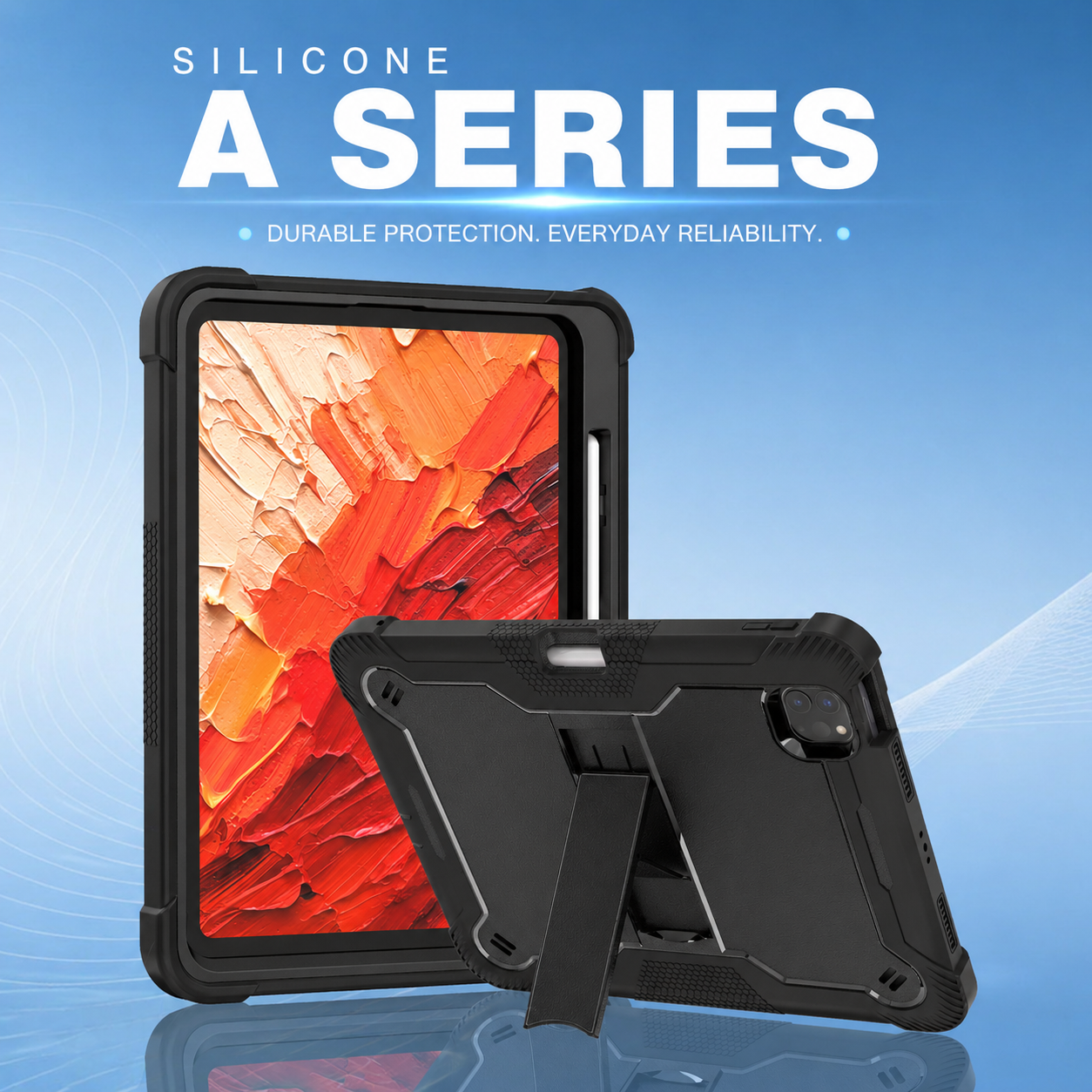
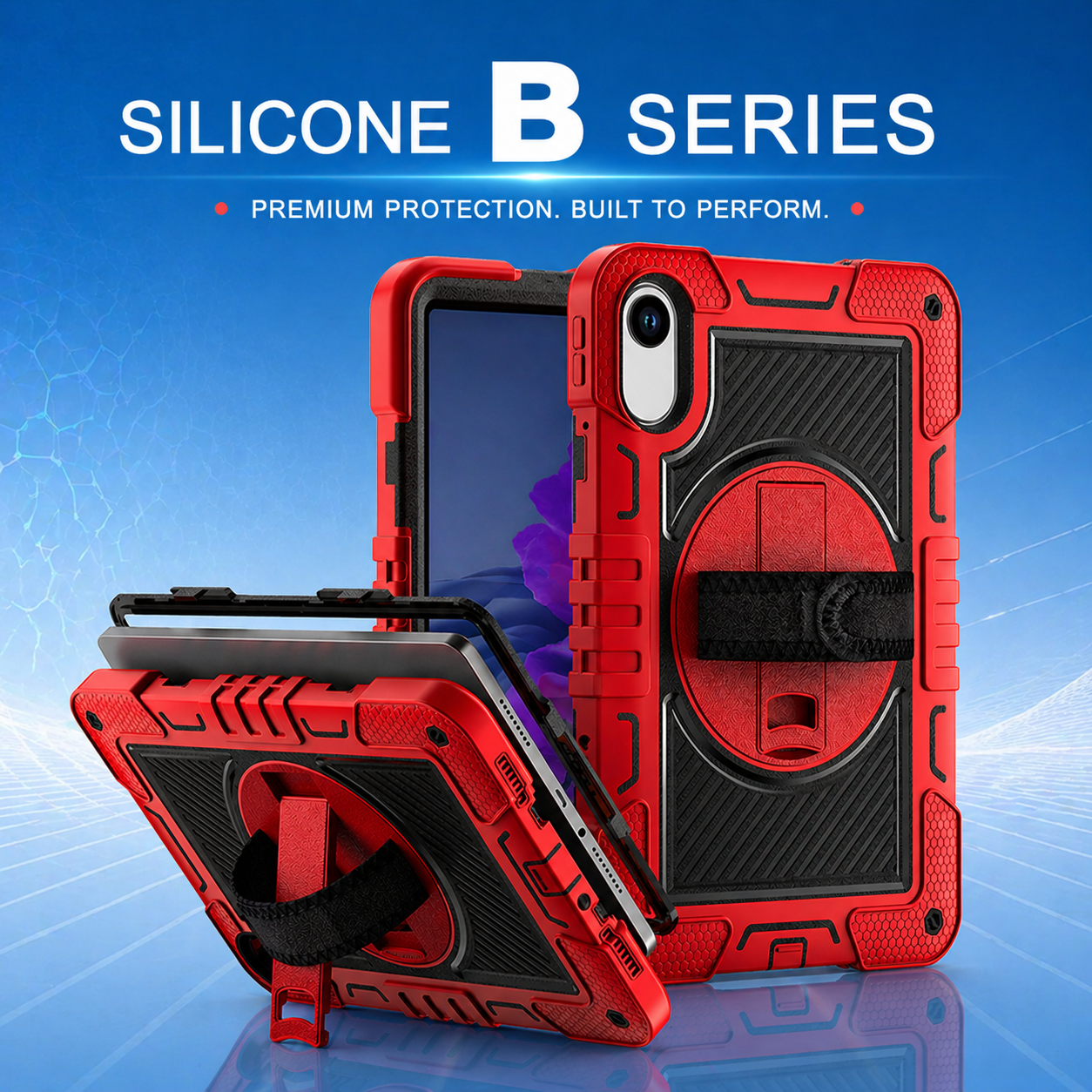
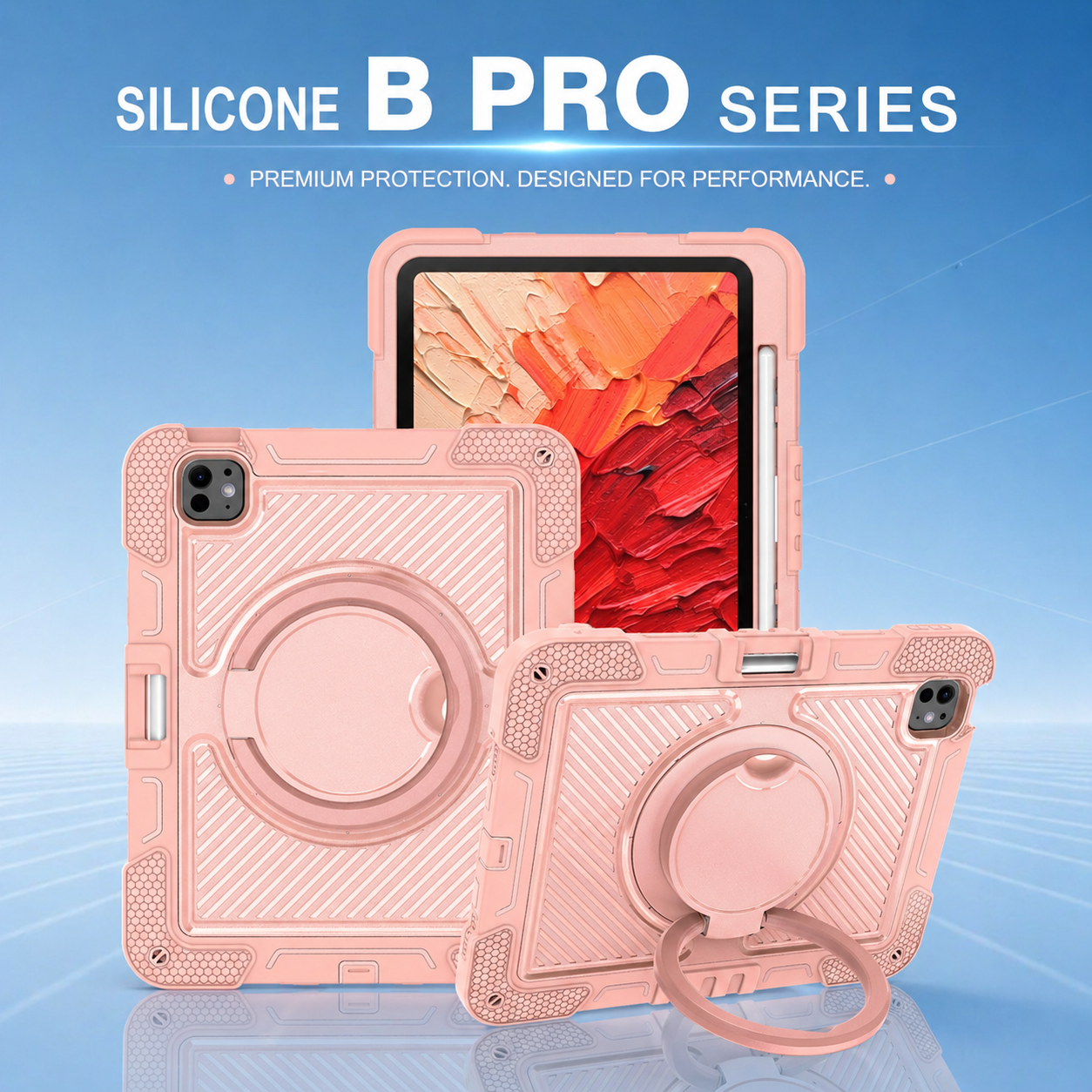
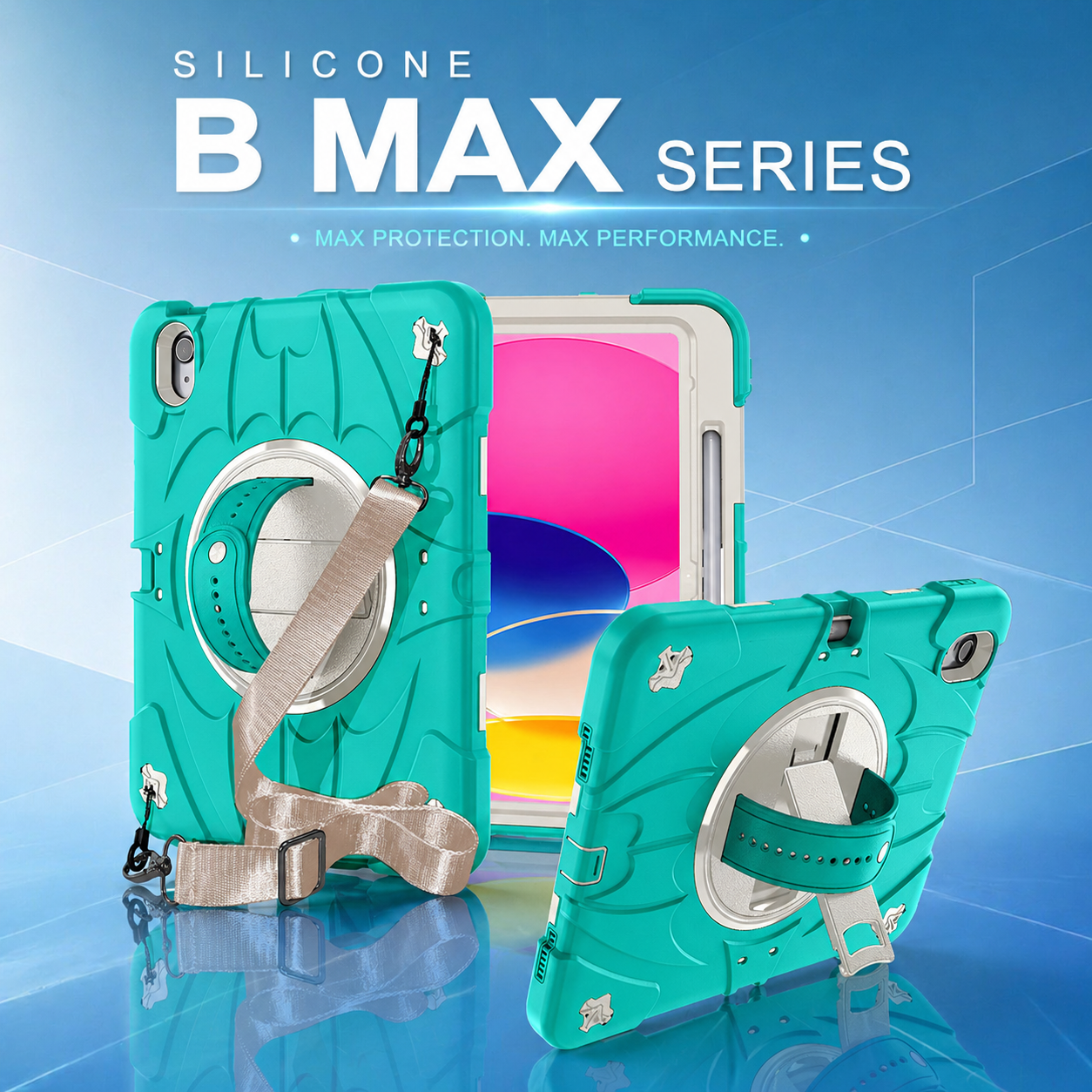
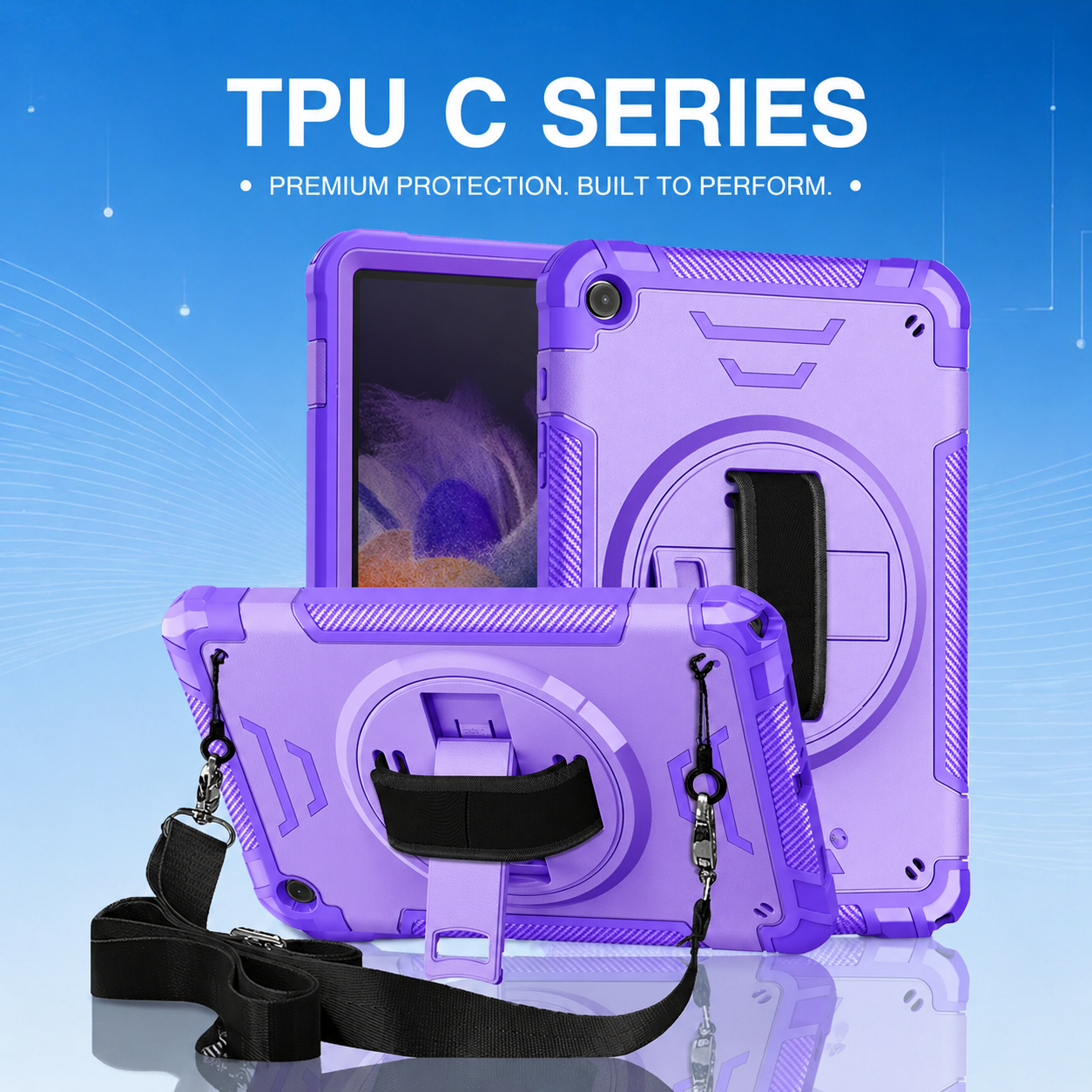
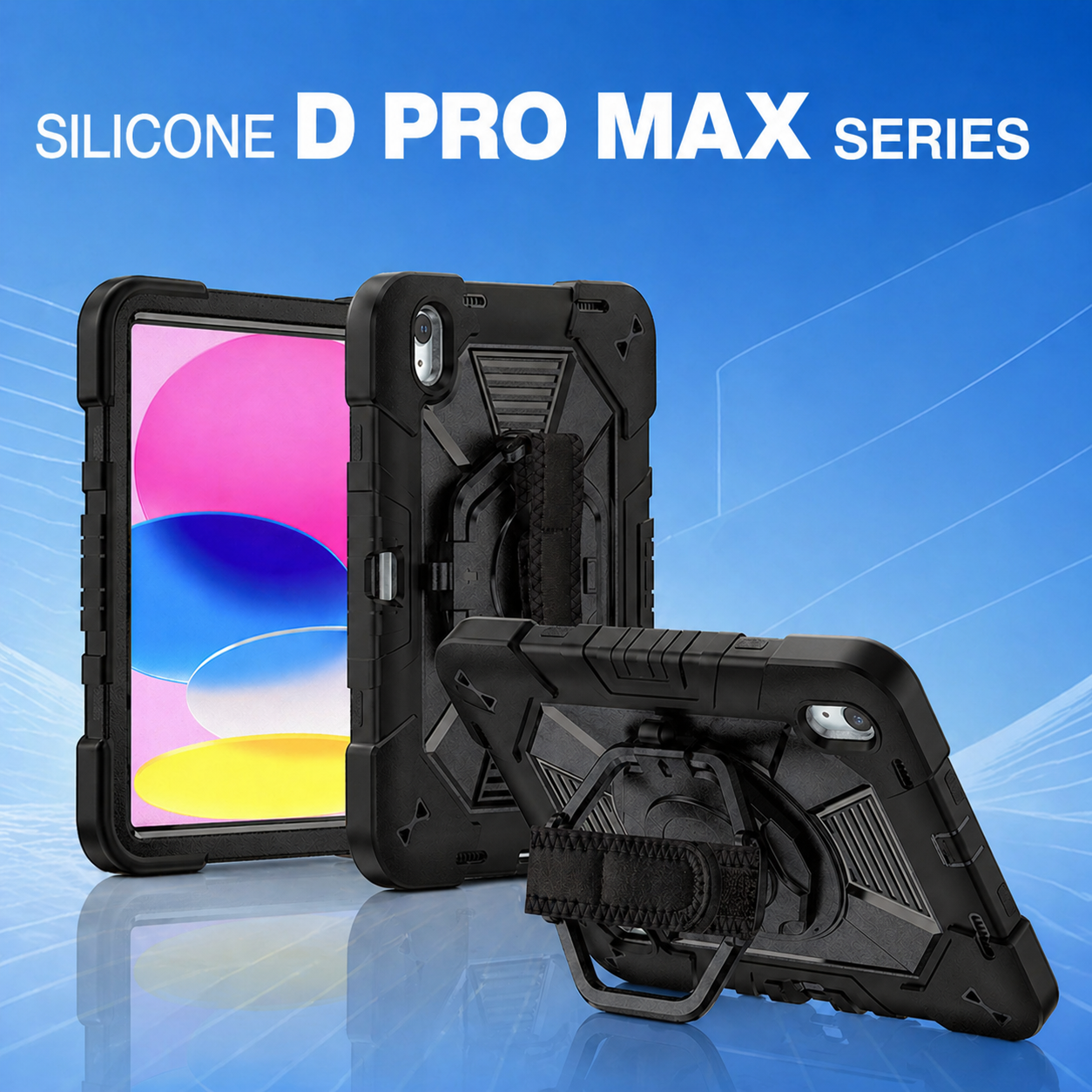
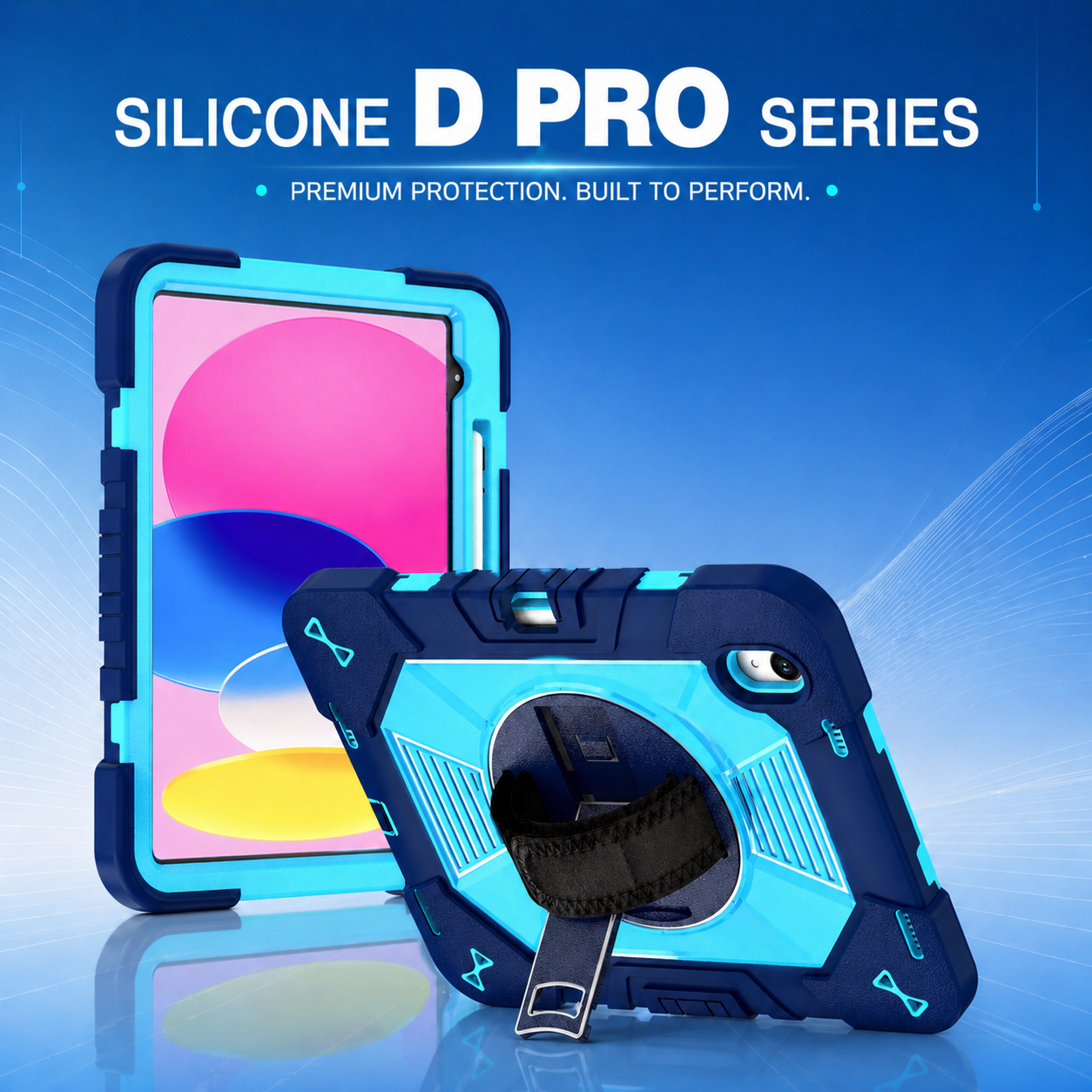
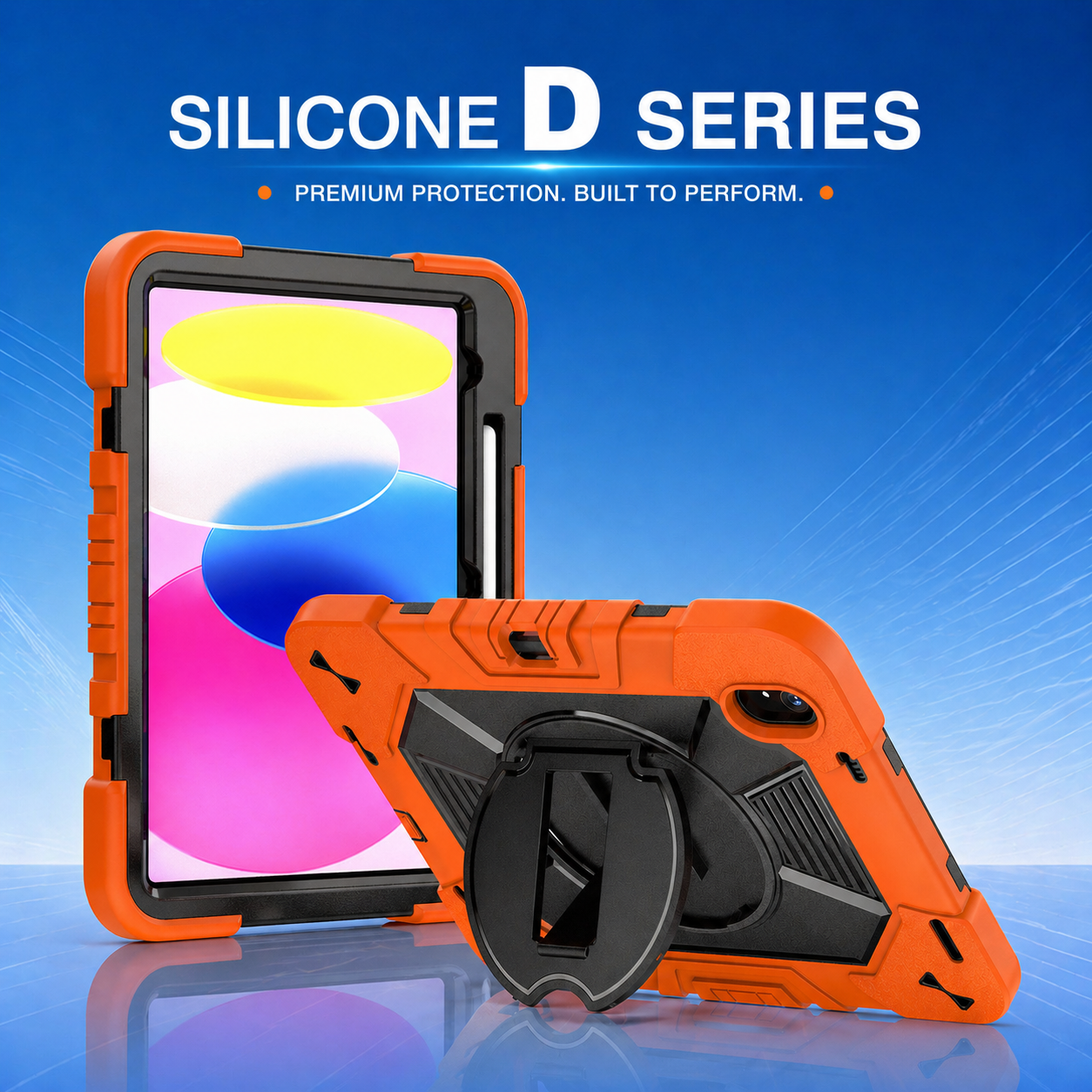

Silicone + PC Rugged Tablet Case Production Technology Explained
A modern rugged tablet case is not simply a thick plastic shell. Its performance comes from combining materials with different mechanical roles, then controlling how those materials are molded, bonded, assembled, and inspected. In a typical PC+Silicone tablet case, polycarbonate provides the rigid skeleton that supports the device and controls dimensional accuracy, while silicone provides grip, cushioning, edge protection, and a softer contact surface. For a professional #TabletCaseManufacturer, the challenge is to turn those material advantages into repeatable mass production.
1. Product Engineering Starts with the Protection Architecture
The first step is deciding how the case will manage impact energy. A well-designed rugged tablet case normally uses a rigid PC inner or middle frame to control deformation around the screen, corners, camera opening, speaker holes, charging port, and buttons. The silicone layer is designed to flex during a drop and to improve friction in the hand.
Engineers then define wall thickness, corner geometry, ribs, undercuts, snap features, kickstand interfaces, hand-strap anchors, pencil storage, and port covers. Instead of adding thickness everywhere, the goal is to reinforce the zones that receive the highest loads. This reduces weight, molding time, and material consumption while keeping the case practical for field use.
At the same time, the CAD model must follow design-for-manufacturing rules. Draft angles help molded parts release from the tool, consistent wall sections reduce sink marks and warpage, and rounded transitions reduce stress concentration. For cases that will use overmolding, the PC substrate also needs retention features or compatible bonding surfaces so the soft material remains stable after repeated twisting and drops.
2. PC Injection Molding Builds the Structural Frame
Polycarbonate is selected for many protective electronic housings because it offers high impact resistance and good dimensional stability. Before molding, the resin is prepared according to the material supplier's processing requirements, because moisture and uncontrolled temperature can affect appearance and mechanical performance.
During injection molding, molten PC fills a precision steel mold that forms the tablet-retention frame, corner supports, camera opening, button geometry, and accessory interfaces. Gate position, injection speed, holding pressure, cooling balance, and ejection design all influence the finished part. If the frame warps, even slightly, the tablet may become difficult to install or the protective lip may not sit evenly around the display.
After molding, operators or automated equipment check critical dimensions, surface condition, flash, short shots, sink marks, and deformation. For OEM projects, early samples are normally compared with the approved drawing, golden sample, or inspection standard before the tool enters stable mass production.
3. Silicone Creates Grip and Shock Absorption
The soft layer can be produced in more than one way. One common method is to mold a separate silicone jacket and assemble it around the PC frame. Another is an overmolding process in which silicone is molded around a finished rigid substrate. The correct route depends on the selected silicone grade, expected bonding method, tool investment, production volume, geometry, and required appearance.
For overmolded structures, the substrate must be positioned accurately in the second mold. Mechanical locks, holes, ribs, grooves, or material-compatible adhesion can help the soft layer stay attached during use. Mold design must also control silicone flow around thin edges and detailed features so the final surface is complete without excessive flash.
The silicone hardness is selected to balance cushioning and handling. A very soft layer can absorb energy and feel comfortable but may stretch too easily. A harder layer can feel more stable but may transfer more impact. Texture is also important: fine patterns can improve grip and reduce visible fingerprints, while deeper patterns can support industrial applications where users wear gloves.
4. Assembly, Functional Testing, and Quality Control
After the hard and soft components are produced, the case moves into assembly. Depending on the design, the process may include installing a rotating kickstand, hand strap, shoulder strap anchors, screen frame, port covers, pencil holder, or decorative components. Assembly fixtures help maintain consistent positioning and reduce damage to molded surfaces.
Quality control should evaluate more than appearance. The finished case must fit the target tablet correctly, allow access to ports and cameras, preserve button response, keep the screen border clear, and hold accessories securely. Drop testing, repeated kickstand rotation, strap pull testing, fit checks, and visual inspection can be added according to the customer's specification and application risk.
For business programs, traceability is equally important. Material batches, molding machines, production dates, inspection results, and defect records can be linked to lots. This makes it easier to investigate problems and maintain consistency across repeat orders.
5. Preparing the Design for OEM and ODM Mass Production
A successful production program connects engineering with supply-chain planning. Before mass production, the buyer and supplier should confirm device model, target protection level, color, logo process, packaging, accessories, inspection criteria, expected order quantity, and shipment schedule. Branding can be added through molded logos, printing, laser marking, labels, or customized packaging depending on the project.
Pilot production is useful because it validates the whole process rather than only the mold. Engineers can review cycle stability, assembly time, cosmetic consistency, fit, packaging protection, and inspection efficiency before higher-volume orders begin. This is especially important for enterprise, education, healthcare, warehouse, logistics, and field-service deployments where replacement cost and device downtime matter.
When the rigid PC frame, silicone cushioning, tool design, process parameters, assembly controls, and inspection plan are developed as one system, a protective case becomes a scalable engineered product rather than a collection of molded parts.
Next production focus: two-shot silicone overmolding for impact protection






.png)
+86 13422271740
.png)
info@tongmeitech.com
.png)
No. 34, Mashe Section, Guihe Road, Lishui Town, Foshan, Guangdong, China