- 1
- BLACKL
- TABLETAPPLE iPad Mini 8NEW iPad A16(2025) iPad 10.9" 10th (2022) iPad 10.2" (7th/8th/9th) iPad Air 13" (M2/M3/M4)(2024/2025/2026)NEW iPad Air 11" (M2/M3/M4)(2024/2025/2026)NEW iPad Mini 8.3" (A7 Pro/6th Gen) iPad Pro13"(M4/M5)(2024/2025) iPad Pro11"(M4/M5)(2026) iPad 9.7" (5th/6th Gen) iPad Pro 12.9"(2018-2022) iPad Pro 11"(2018-2022) iPad 9.7"(2th/3th/4th) iPad Air 10.9"(4th/5th Gen) iPad Mini 7.9"(4th/5th Gen)SAMSUNG Galaxy Tab A11 Galaxy Tab A11 Plus Galaxy Tab S11 Galaxy Tab S12 PlusNEW Galaxy Tab S12 UltraNEW Galaxy Tab A9+ Galaxy Tab A9 Galaxy Tab A8 Galaxy Tab A7 Galaxy Tab A7 Lite Galaxy Tab S11 Ultra/S10 Ultra/S9 Ultra/S8 Ultra Galaxy Tab S10+/S9+/S9 FE+ Galaxy Tab S10Lite/S10 FE/S9 FE/S9 Galaxy Tab S8+/S7+/S7 FE Galaxy Tab S8/S7 Galaxy Tab S6 lite Galaxy Tab A10.1 Galaxy Tab A8.4 Galaxy Tab A8.0 Galaxy Tab S10 FE+LENOVO iDea tab 11/Tab K11 Gen 2 /Xiaoxin Pad 11 2025 Lenovo Tab K9 (Tab One) 2025 Lenovo Tab M10 10.1"(2025) Lenovo Tab M10 Plus 10.6" (3rd Gen) Lenovo Tab M10 HD 10.1" (3rd Gen) Lenovo K10/M10 Plus 10.3" (2nd Gen) Lenovo Tab M10 HD 10.1" (2nd Gen)XIAOMI Redmi Pad 2 9.7 InchNEW Xiaomi Pad8/8Pro 11.2" Redmi Pad2/Pad2.4G Xiaomi Pad 6/6 Pro 11" Redmi Pad 10.61" Redmi Pad Se 11" Redmi pad Se 4G 8.7" Xiaomi Pad7/7 Pro 11.2" Redmi Pad Pro/Xiaomi Poco Pad/Redmi Pad2 Pro 12.1HUAWEI Huawei Matepad Se 10.4" Huawei Matepad 11" Huawei Matepad 11.5" Huawei Matepad SE 11" Huawei Matepad T8 8" Huawei Matepad T10 9.7"
- CATEGORIES

Choosing Heavy-Duty Tablet Protection for Mobile Field Teams
Mobile employees work in places where consumer accessories are quickly exposed as weak points. A tablet may move from a service van to a ladder, warehouse aisle, machine room, loading dock, classroom, or patient area during a single shift. It can be dropped, pushed against equipment, handled with gloves, or carried while the user is focused on another task. Selecting heavy-duty protection therefore requires more than finding a thick-looking cover. The case must control impact, preserve access to essential functions, and support the way employees actually move.
Start with a Detailed Use-Environment Profile
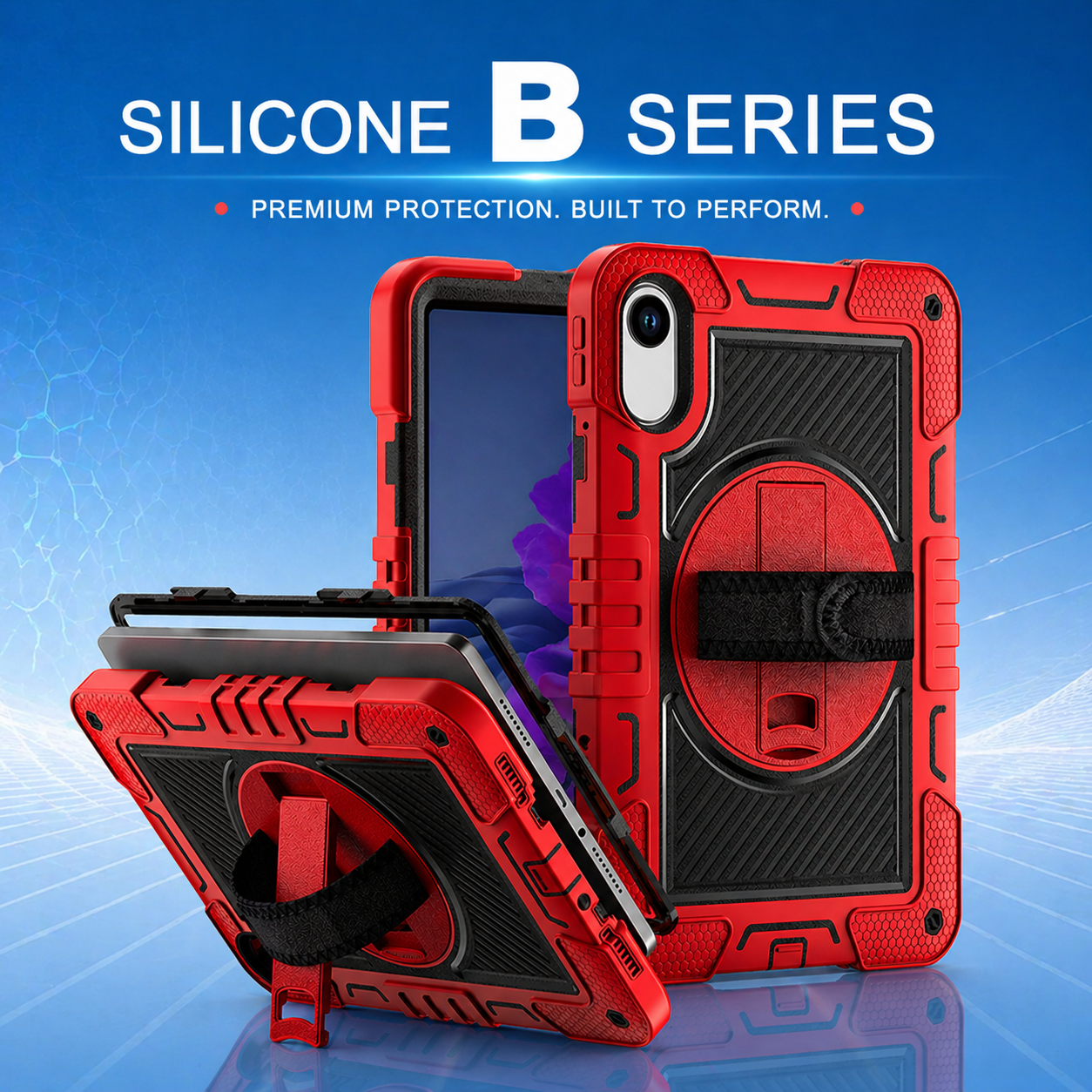
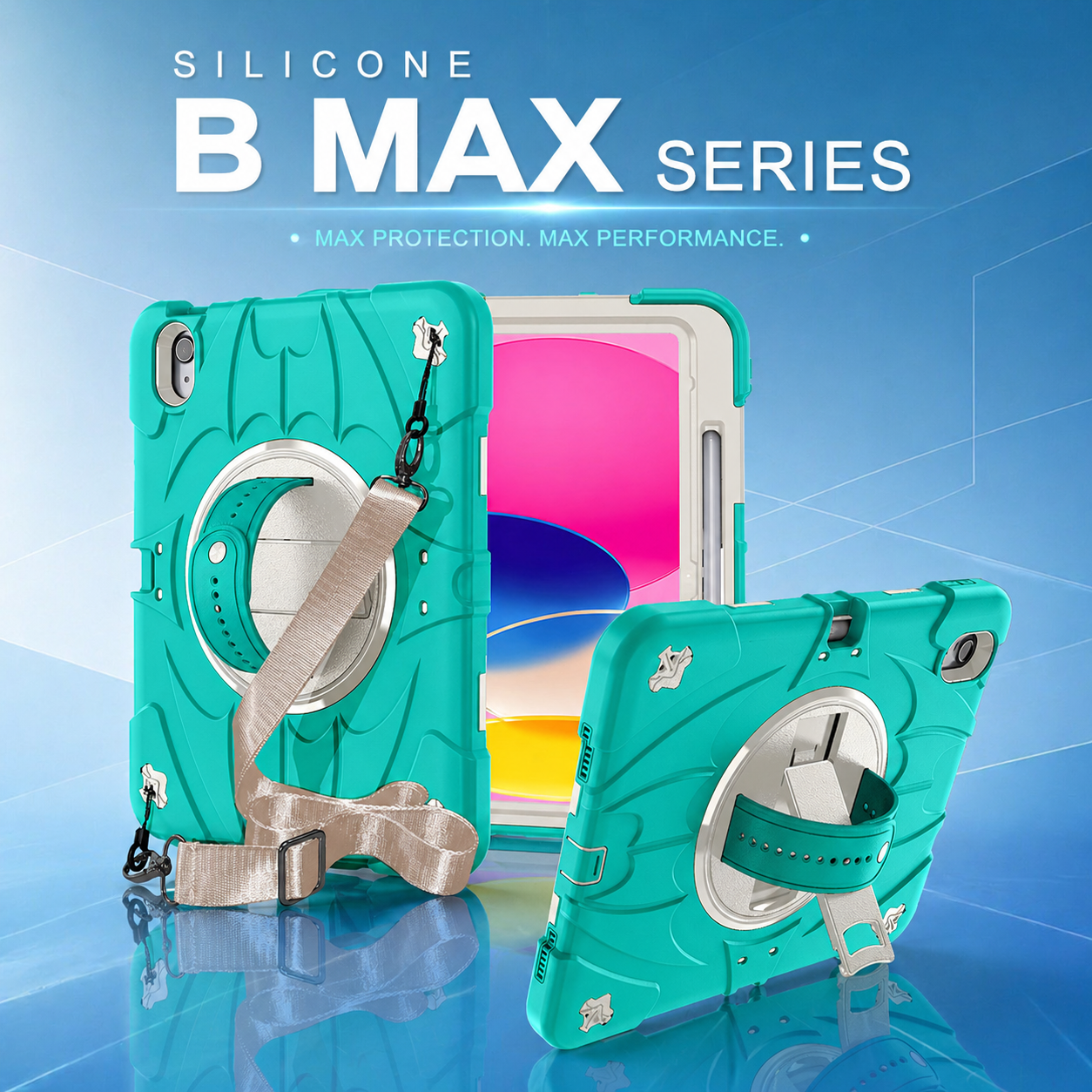
Before comparing products, document where the device will be used, how often it will be carried, and what failures would interrupt work. Consider typical drop height, floor material, exposure to dust or moisture, temperature variation, cleaning chemicals, vibration, and the frequency of charging. A field engineer may need a shoulder strap and stable stand, while a delivery driver may require quick mounting and one-handed access. A warehouse employee may prioritize scanning posture and a secure rotating grip.
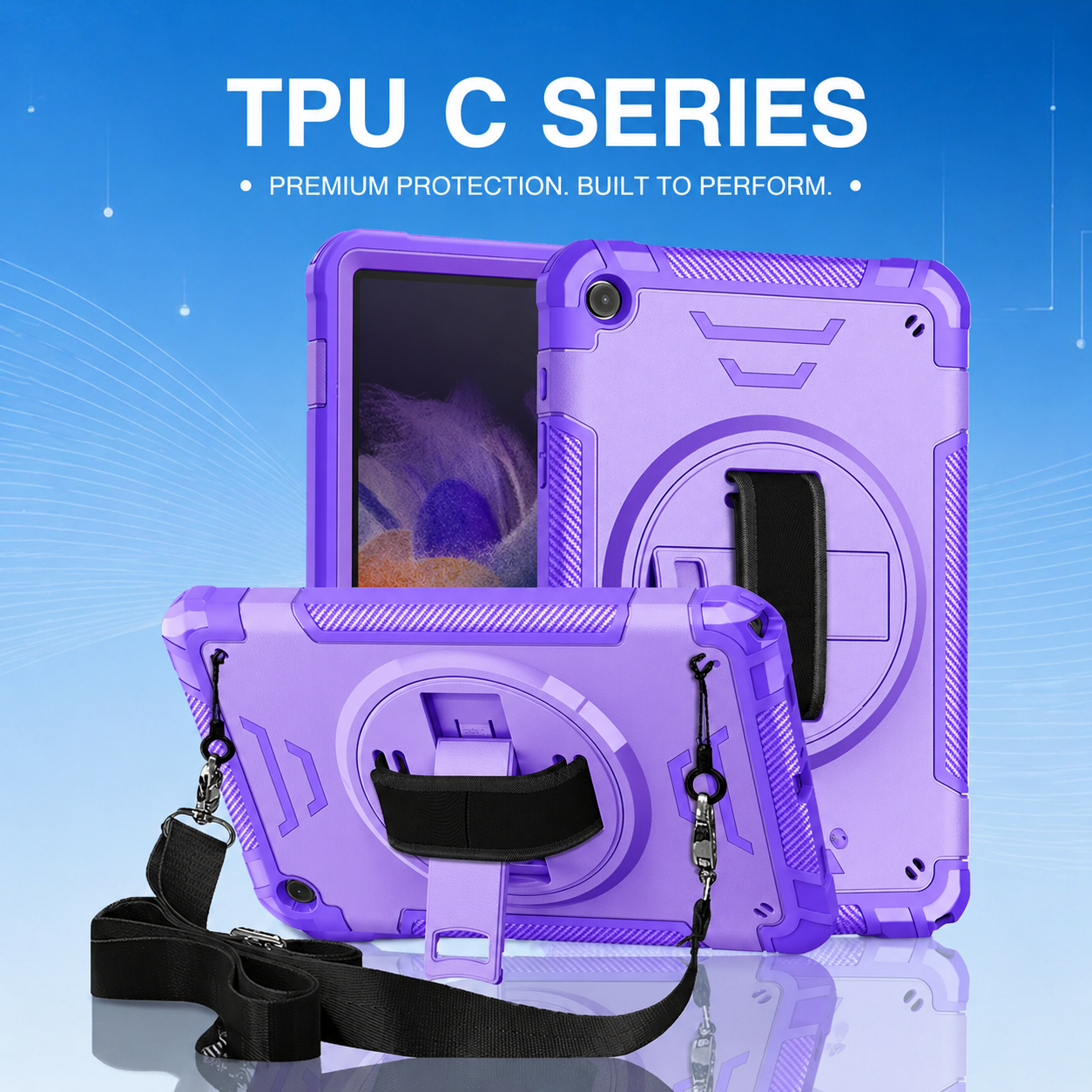
This assessment helps buyers distinguish between decorative protection and operational protection. A TPU tablet case can provide flexible shock absorption and a comfortable grip for moderate-risk environments. However, applications involving repeated drops, rigid impacts, or heavy equipment may require a hybrid structure that combines a hard frame with an elastic outer layer. The correct material system depends on the risk level, not on a single marketing label.
Compare Material Systems and Structural Layers
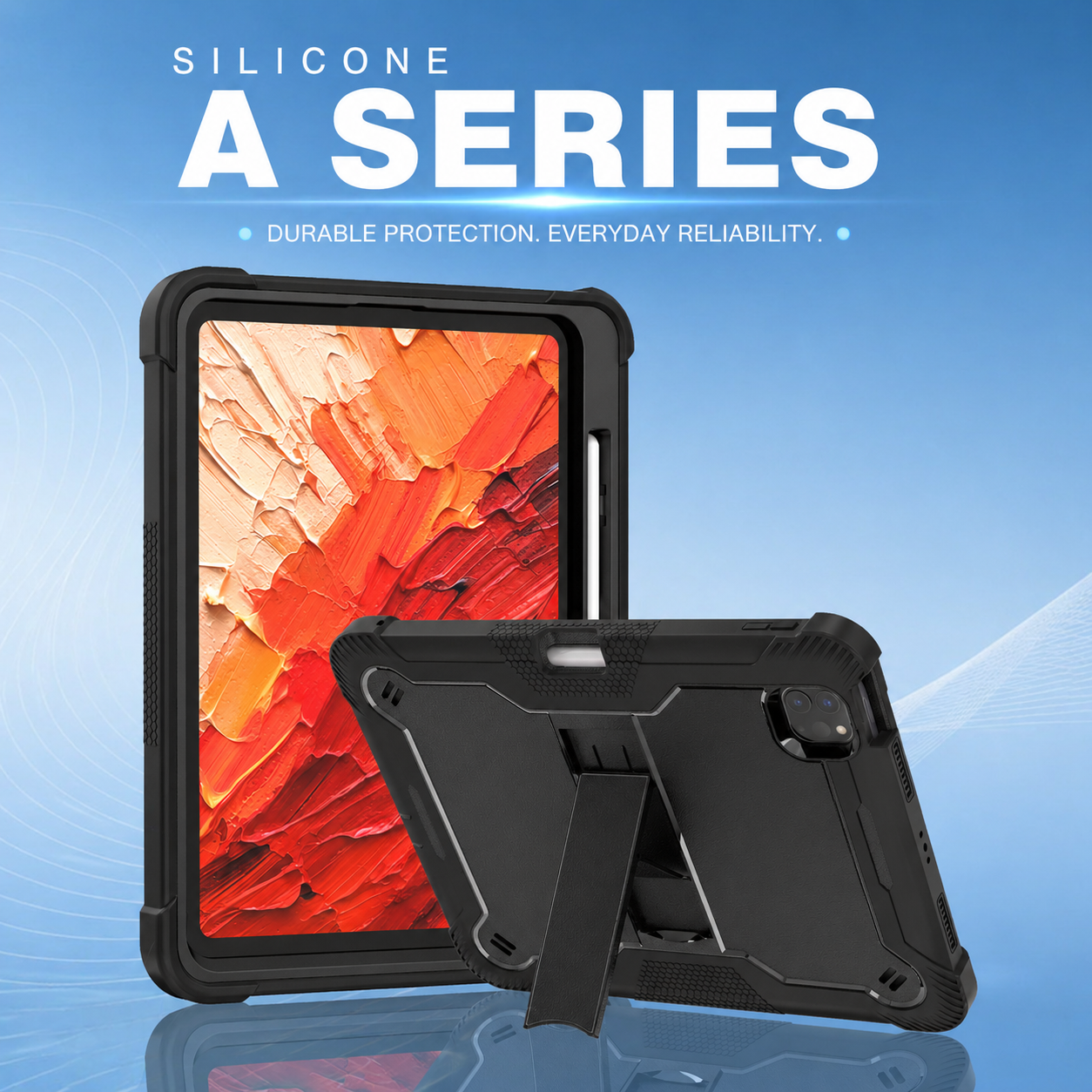
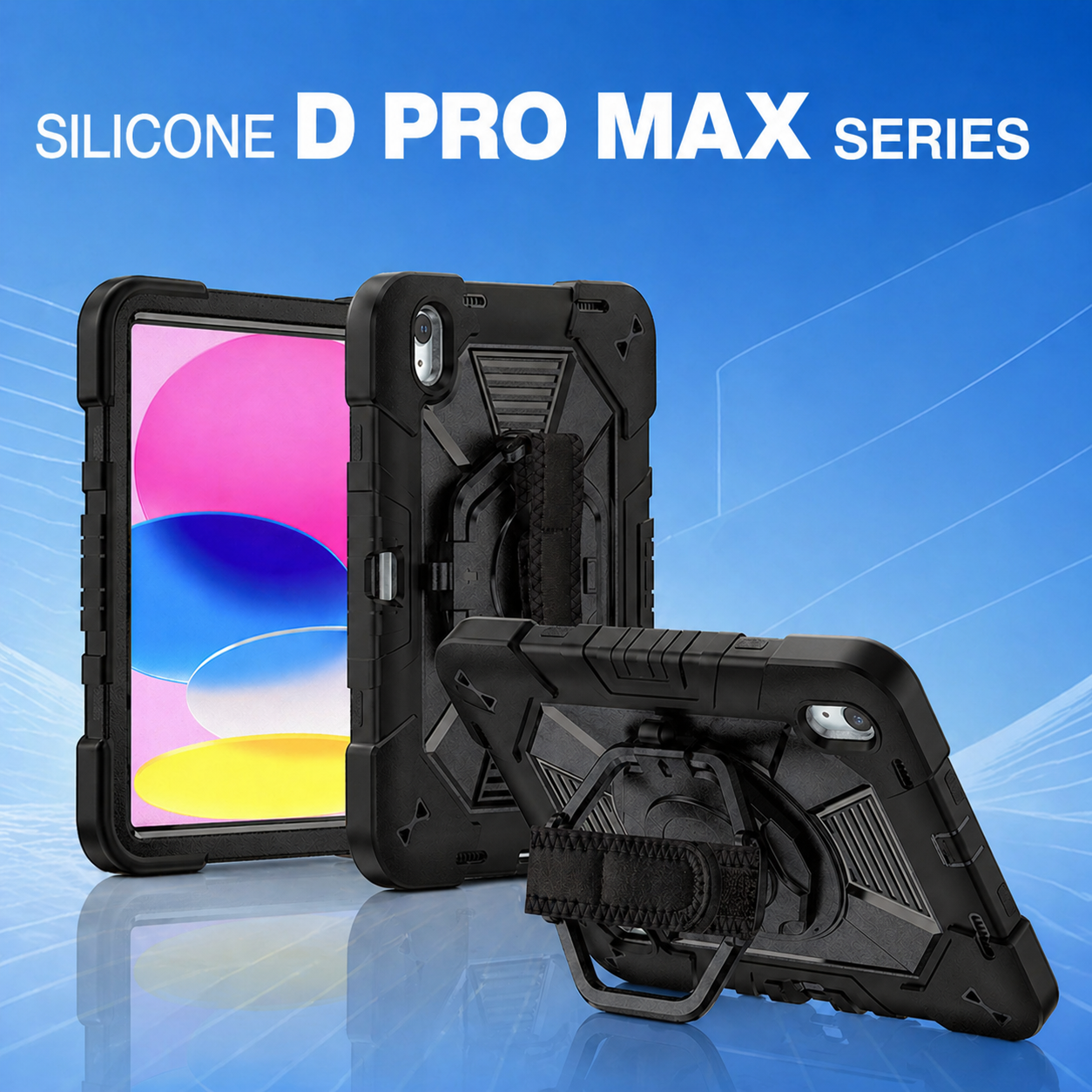
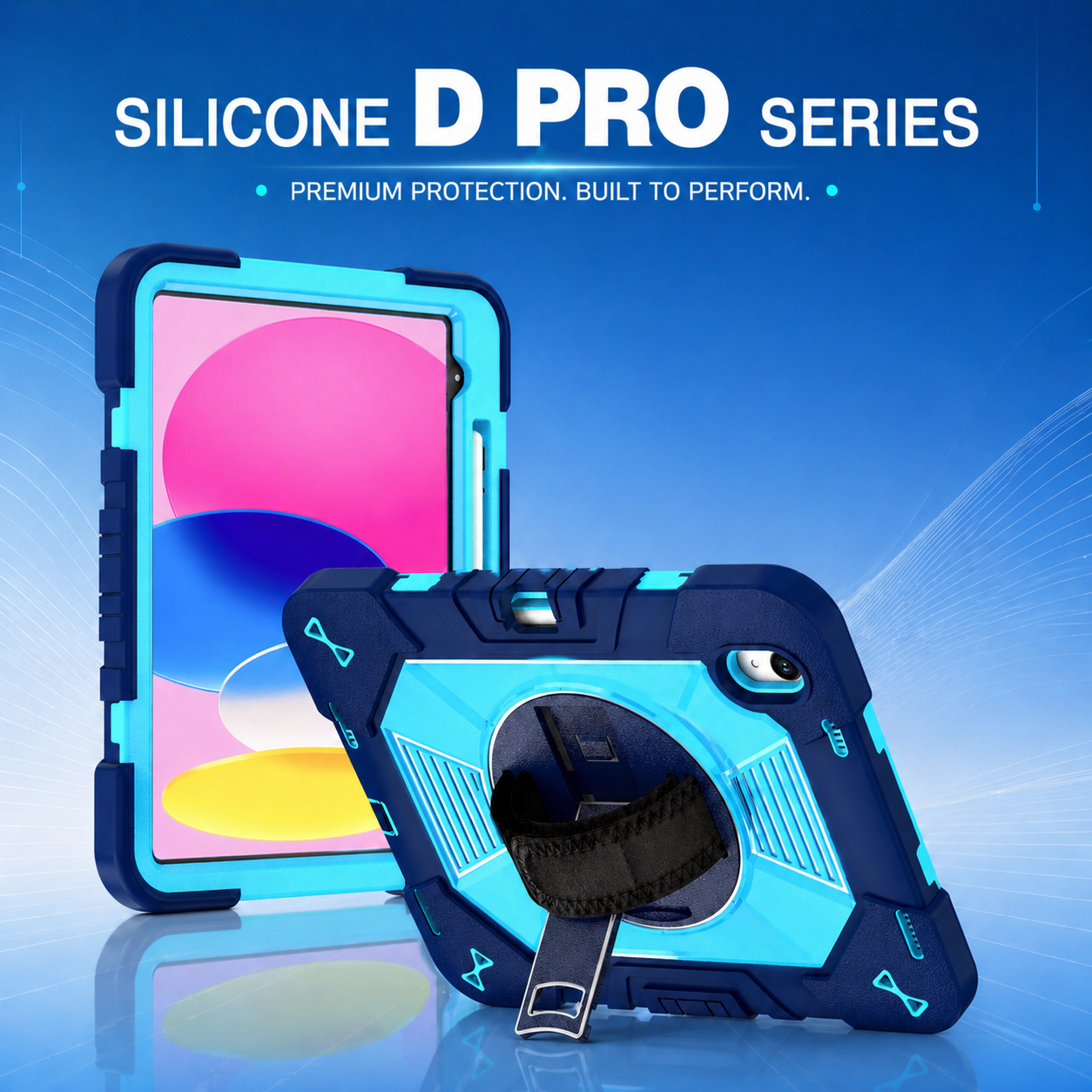
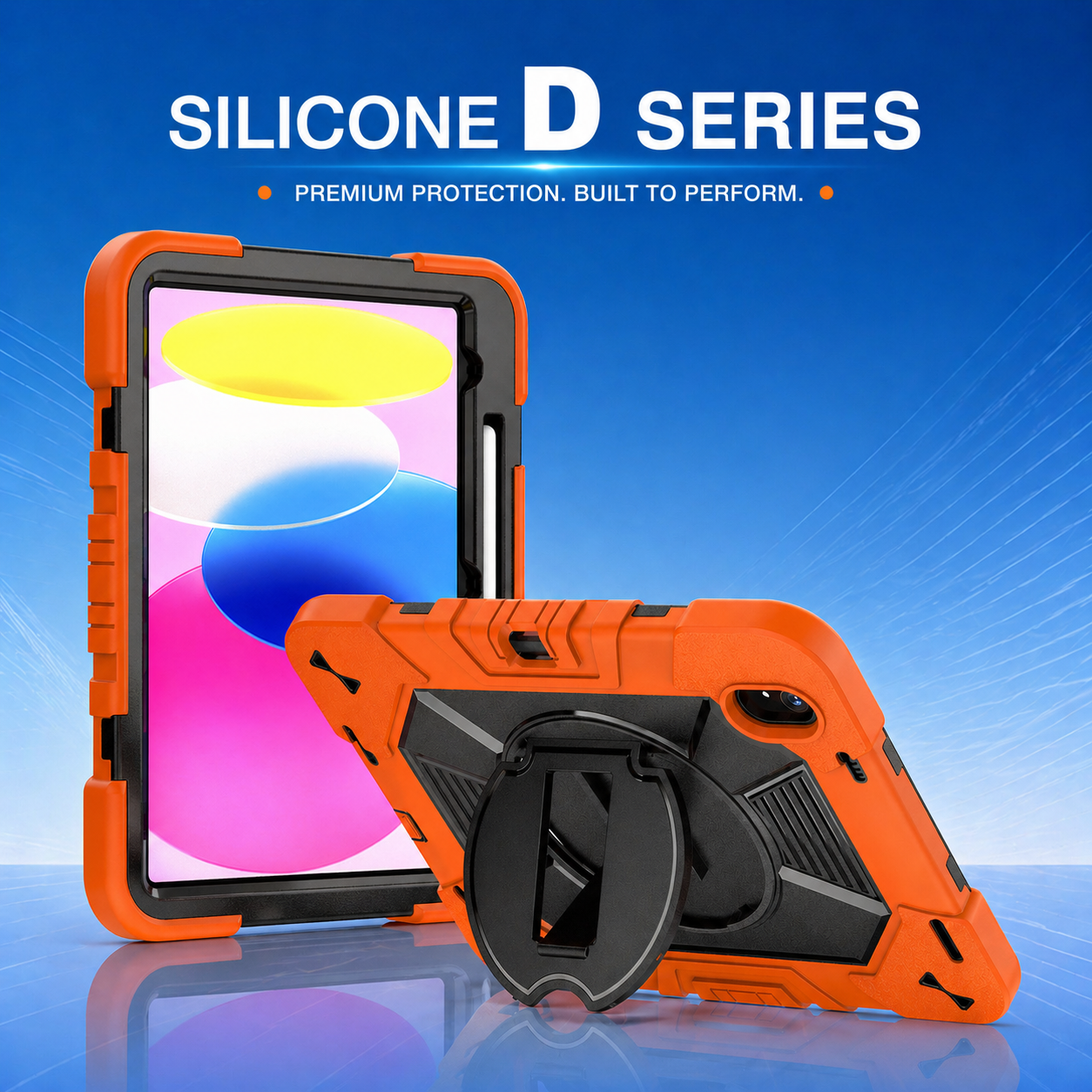
Thermoplastic polyurethane is valued for resilience, abrasion resistance, and flexibility. It can reduce slipping and absorb impact energy, especially around corners and edges. Polycarbonate provides a rigid skeleton that stabilizes the tablet and distributes force across a larger area. Silicone adds cushioning, tactile grip, and useful resistance to vibration. A PC+Silicone tablet case can therefore combine rigidity with elastic shock absorption, provided the layers fit tightly and do not separate under repeated use.
Structural details matter as much as material names. Reinforced corners should extend beyond vulnerable glass edges. A raised front rim should help keep the screen away from flat surfaces without obstructing swipes. Camera openings must remain aligned after impact. Button covers should preserve tactile feedback. Port covers need enough flexibility for frequent use but enough tension to stay closed. Internal contact points should avoid concentrating pressure on the tablet housing.
Test Ergonomics Alongside Drop Protection
A case can survive a fall and still reduce productivity if it is too bulky, slippery, or difficult to rotate. Field testing should include one-handed carrying, glove use, barcode scanning, photography, form completion, video calls, and charging. Users should be able to move between portrait and landscape orientation without loosening their grip. Stands should remain stable at practical viewing angles, including on uneven work surfaces.
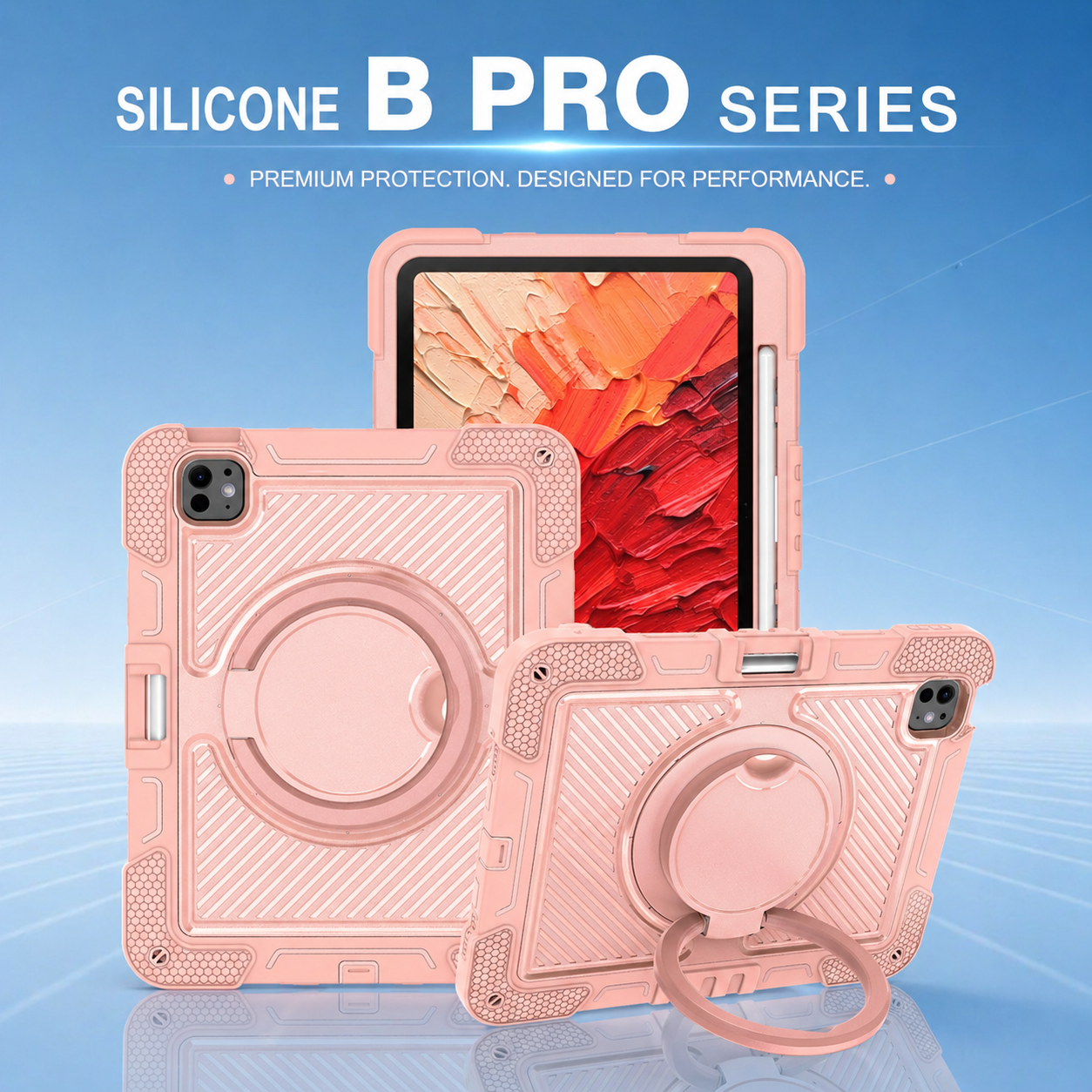
For Apple deployments, a shockproof iPad tablet case should also preserve access to device-specific features such as cameras, microphones, speakers, volume controls, charging connectors, and compatible pencils. The case should not create unwanted pressure around the display or interfere with wireless performance. Buyers should verify the exact device generation because small dimensional changes can affect fit, camera alignment, and port access.
Evaluate Carrying, Mounting, and Serviceability
Many field failures occur while the tablet is being carried rather than used. Hand straps, shoulder straps, and attachment points must be secured to load-bearing parts of the case. Rotating mechanisms should resist loosening after repeated cycles. Kickstands should lock reliably and fold into the case without creating a snag point. Vehicle, cart, wall, or equipment mounts should connect in a way that does not weaken the protective frame.
Serviceability is equally important for large fleets. Cases should be removable for device repair without destructive disassembly. Replaceable straps, stands, or clips can reduce lifecycle cost. Cleaning procedures should be documented, especially in healthcare, education, food handling, and shared-device environments. Packaging should clearly identify the tablet model and accessory configuration so deployment teams can distribute the correct unit quickly.
Use Real-World Acceptance Criteria
Rather than relying only on supplier claims, create an acceptance checklist. Inspect sample fit, edge coverage, stand stability, grip comfort, strap strength, port access, and screen interaction. Conduct controlled drop testing that reflects realistic orientations and surfaces. Repeat opening, rotating, folding, and carrying actions to identify wear points. Ask several employees to test the sample because hand size, work posture, and task sequence vary.
A qualified manufacturer should be able to support drawings, prototypes, material confirmation, mold adjustments, pilot production, and consistent quality inspection. For OEM or ODM programs, confirm logo methods, color tolerances, packaging, labeling, and change-control procedures before mass production. The objective is a repeatable protection platform that can be deployed across sites without unexpected variation.
Build Protection Around the Work, Not the Device Alone
The strongest purchasing decision connects the physical case to the complete mobile workflow. Consider how employees receive devices, carry them, charge them, mount them, clean them, and return them for service. When protection is selected through this broader lens, it reduces device damage while improving speed, confidence, and consistency.
The next stage is to examine how multiple structural layers manage impact. A buyer comparing hybrid designs should understand the function of the three-layer rugged tablet protection system before choosing a production specification.
SEO Keywords
#TabletProtectionSolution, #TabletCaseManufacturer, #OEMTabletCase, #IndustrialTabletSolution, #FieldServiceTechnology, #TabletCaseSupplier, TPU tablet case, PC+Silicone tablet case, shockproof iPad tablet case.






.png)
+86 13422271740
.png)
info@tongmeitech.com
.png)
No. 34, Mashe Section, Guihe Road, Lishui Town, Foshan, Guangdong, China